

Hundreds of wine curious Gen Z students enroll in my Wine Appreciation class at San Jose State University each year. The majority are novice consumers of all beverage alcohol types and many have never tasted wine or profess they only like sweet wine when signing up for 18 weeks of wine immersion.
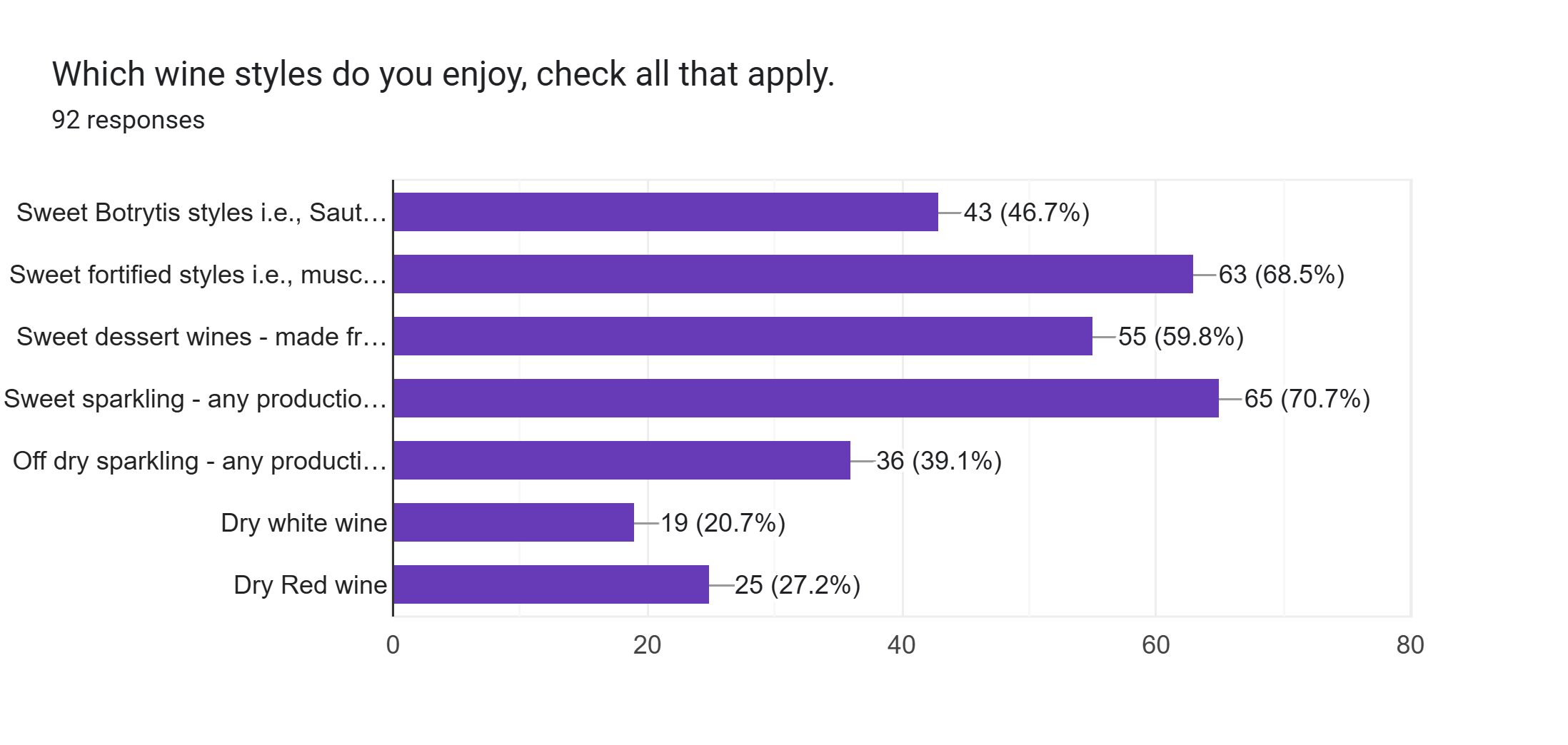
They are a strikingly diverse group hailing from a dozen different nations and speaking just as many different languages. The one thing 85 percent of this cohort has in common, they enjoy and appreciate the world’s historic sweet wines.
The semester-long curriculum for this course follows a slow build towards introducing the world’s wine regions. Students first learn the mechanics of their own physiology by studying olfaction, gustation and the sensations of texture and temperature all of which comprise flavor. They achieve working mastery of the Wine and Spirit Education Trust Systematic Approach to Tasting (SAT) within a few weeks and, by working with it begin to understand their own thresholds and preferences.
This foundational training prepares them for studying the wines of the U.S., France, Italy, Spain, Portugal, Germany, Australia, New Zealand, Chile and Argentina. Given that 85 percent of the students indicate they prefer off dry and sweet wines, there’s a wealth of delicious, historic wines to show them.
Sweet wines of the world
France is a treasure trove of sweet and fortified historic styles. Students respond with enthusiasm to the botrytized Chenin Blancs of the middle Loire Valley that include everything from demi-sec and moelleux Vouvray to Quarts de Chaume, the Vendanges Tardives and Sélection de Grains Nobles of Alasce, the vins doux naturels of Beaumes de Venise and Roussillon, Sauternes and the ethereal sweet wines of the Premières Côtes de Bordeaux.
The wines of Italy’s Prosecco, Asti and Brachetto regions are widely enjoyed and led to discoveries of Recioto della Valpolicella and Recioto di Soave, the joys of Lambrusco, the complexity of vin Santo, the rarified passito wines of Pantelleria and Liguria’s Cinque Terre.
In a discussion assignment asking students to rank three sweet wines from Northern Italy, Brachetto d’Aqui edged out Prosecco with a Lambrusco trailing in distant third. The makers of Brachetto know full well novice consumers enjoy their wines and students only need an introduction to the wine to start seeking it out on the shelves of Eataly or Total Wine & More.
Germany’s Pradikat wine styles serve as an ideal training ground for dialing in students’ thresholds for the perception of residual sugar. In a blind tasting exercise with Kabinett, Spatlese and Auslese wines made the the same producer from the same Mosel vineyard and vintage, they learn to gauge the increasing levels of sweetness and to discover the electric tension between acidity and residual sugar that are the hallmarks of these styles.
Rare and complex historic wines like Mavrodaphne of Patras resonate with students who enjoy Pedro Ximenez sherry and more complex vins doux naturels.
When is comes to New World’ wine regions there are fewer historic sweet styles but wines like Rutherglen Muscat and Canada and New York’s Ice wines, mandatory wines for WSET tasters, are always favorites.
In a recent survey of 93 students, sweet wines of all styles outperform dry styles.
Gen Z survey says

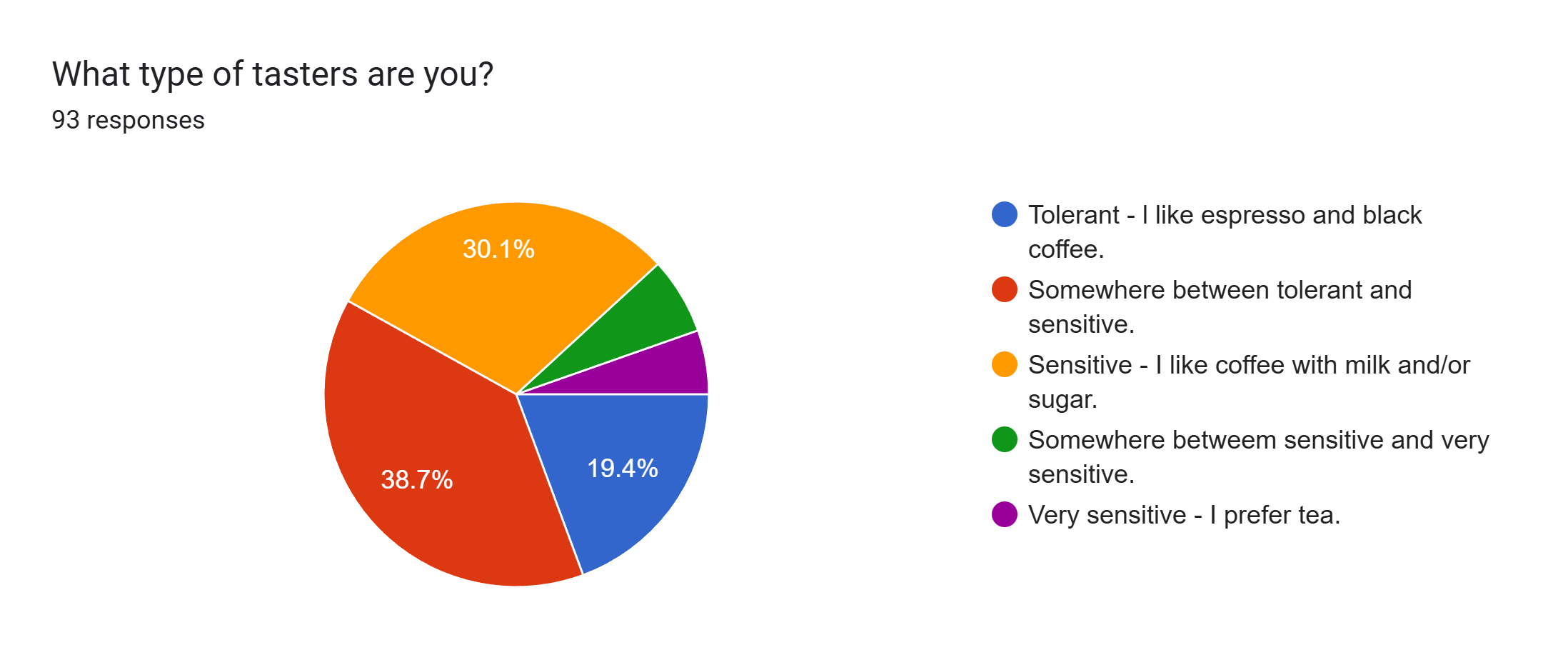
When asked about their taste tolerance levels, 58 percent of students are either tolerant or between tolerant and sensitive tasters (WSET).

The good news for producers of dry wines. By the end of the semester, over 20 percent of students are enjoying dry wines and almost half of the students who began the semester with little or no interest in dry wine styles are more interested in exploring.


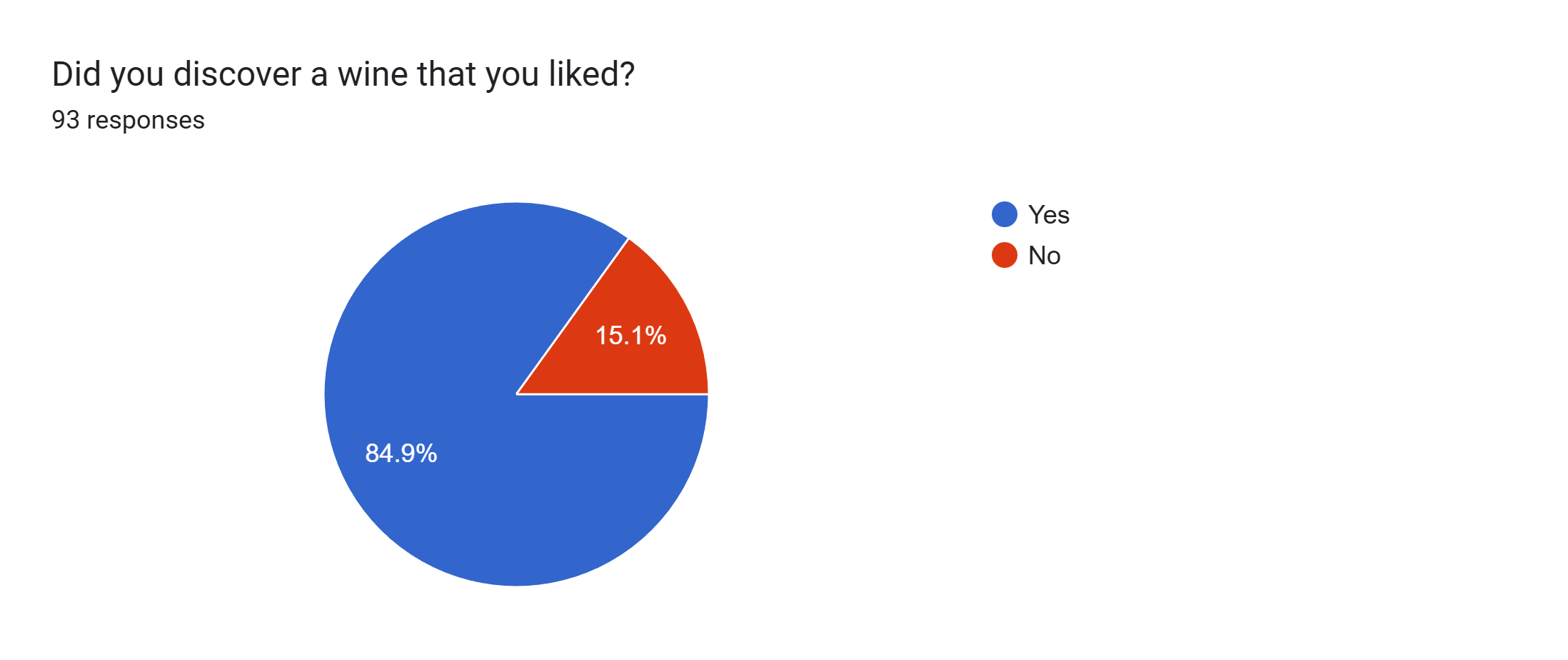
The most sobering data point from the survey reveals that despite being exposed to a plethora of wine styles, 15 percent of students indicate that they did not find a wine they enjoyed which I refer to as a gateway wine. One student commented, “Before [this class], I thought I hated all wines and that they all tasted the same. But after this course, I’ve learned that there are so many types of wine with different styles of taste. Although I don’t love it, I can appreciate it much more.”

When wine curious Gen Z consumers are shown high quality sweet wines and given some basic information about the origins of the wine and the methods used to make them, their appreciation and liking for those wines increases. As these wine styles cost more due to their production methods, the biggest hurdle for their adoption is price.
The message my students are sending to the makers of the world’s historic sweet wines amounts to a love letter. My passion for these historic wines can only be described as a love affair.
Cotton Castle tours Turkey Great balance between sightseeing and relaxation. https://shriramsharnam.com/?p=5707
Really great read — I appreciate how clearly you explained the importance of local online presence for businesses today. It’s a topic many companies overlook, i find it very interesting and very important topic. can i ask you a question? also we are recently checking out this newbies in the webdesign industry., you can take a look . waiting to ask my question if allowed. Thank you
Really great read — I appreciate how clearly you explained the importance of local online presence for businesses today. It’s a topic many companies overlook, i find it very interesting and very important topic. can i ask you a question? also we are recently checking out this newbies in the webdesign industry., you can take a look . waiting to ask my question if allowed. Thank you
Pingback: Gen Z Wine Likers Inspire Hope - deborahparkerwong