All posts filed under: The Tasting Panel

THE TASTING PANEL magazine is the most widely circulated trade publication in the beverage industry focused on beverages, the beverage trade and the people who make the industry tick. Print and digital editions published monthly with a combined January/February issue. www.tastingpanelmag.com

Benjamen Montpetit is the Marvin Sands Endowed Chair in the Department of Viticulture and Enology at the University of California, Davis.

Meet UC Davis Yeast Biologist Benjamen Montpetit

The University of California, Davis, has a long history of groundbreaking research that has significantly impacted the global wine industry. Standing on the shoulders of giants With the retirement of several key academics whose research in the areas of grapevine genetics, fermentation science, and sensory science has played a crucial role in the development and advancement of the modern American wine industry, the Department of Viticulture and Enology now has new leadership. In January 2024, Benjamen Montpetit began his tenure as the Marvin Sands Endowed Chair in the department, succeeding David Block, who spent nearly 13 years in the role. Montpetit’s journey Montpetit’s journey from studying biochemistry to assuming leadership of the world’s top wine-science depart­ment was a natural progression. After earning a Ph.D. from the University of British Columbia, he made his way to the University of California, Berkeley, for postdoctoral research in gene expression regulation using yeast species Saccharomyces cerevisiae. As a self-described foodie, Montpetit had already formed a deep personal connection to Vancouver’s multicultural restaurant scene, but it was a memo­rable glass …

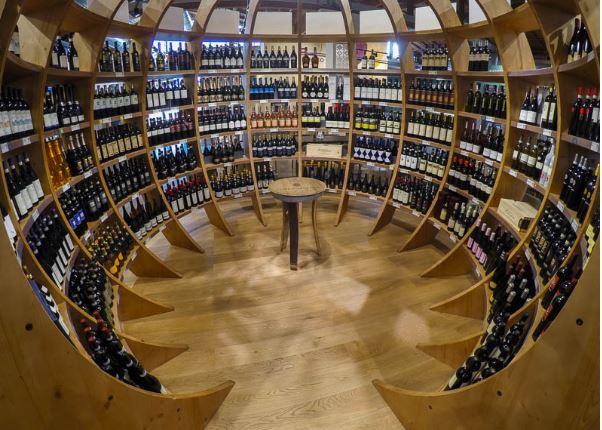
Wine cellar at PRESS restaurant in St. Helena, CA.

Napa Valley’s Vincent Morrow Looks to Tomorrow

Morrow, who received MICHELIN’s California Sommelier Award in 2022, oversees the wine cellar at PRESS, which houses the largest collection of Napa Valley wines in the world and is focused on library wines. When adding a new bottling to the list, he looks for winemakers who have worked their way up at acclaimed producers and then started their own labels.

Champagne Palmer has sourced from the same Premier Cru and Grand Cru vineyards in the Montagne de Reims region of Champagne for 50 years.

Rare perpetural reserve a hallmark at Champagne Palmer

Beyond the soleras and the envi­able Montagne de Reims terroir, the wines of Champagne Palmer’s Vintage Collection reveal a third strength: The cooperative of seven producers has not altered its vineyard sourcing since its founding in 1947, forming what Vervier calls the “DNA of the brand.”

Sarah Vandendriessche on Guiding Environmental Stewardship in Napa Valley

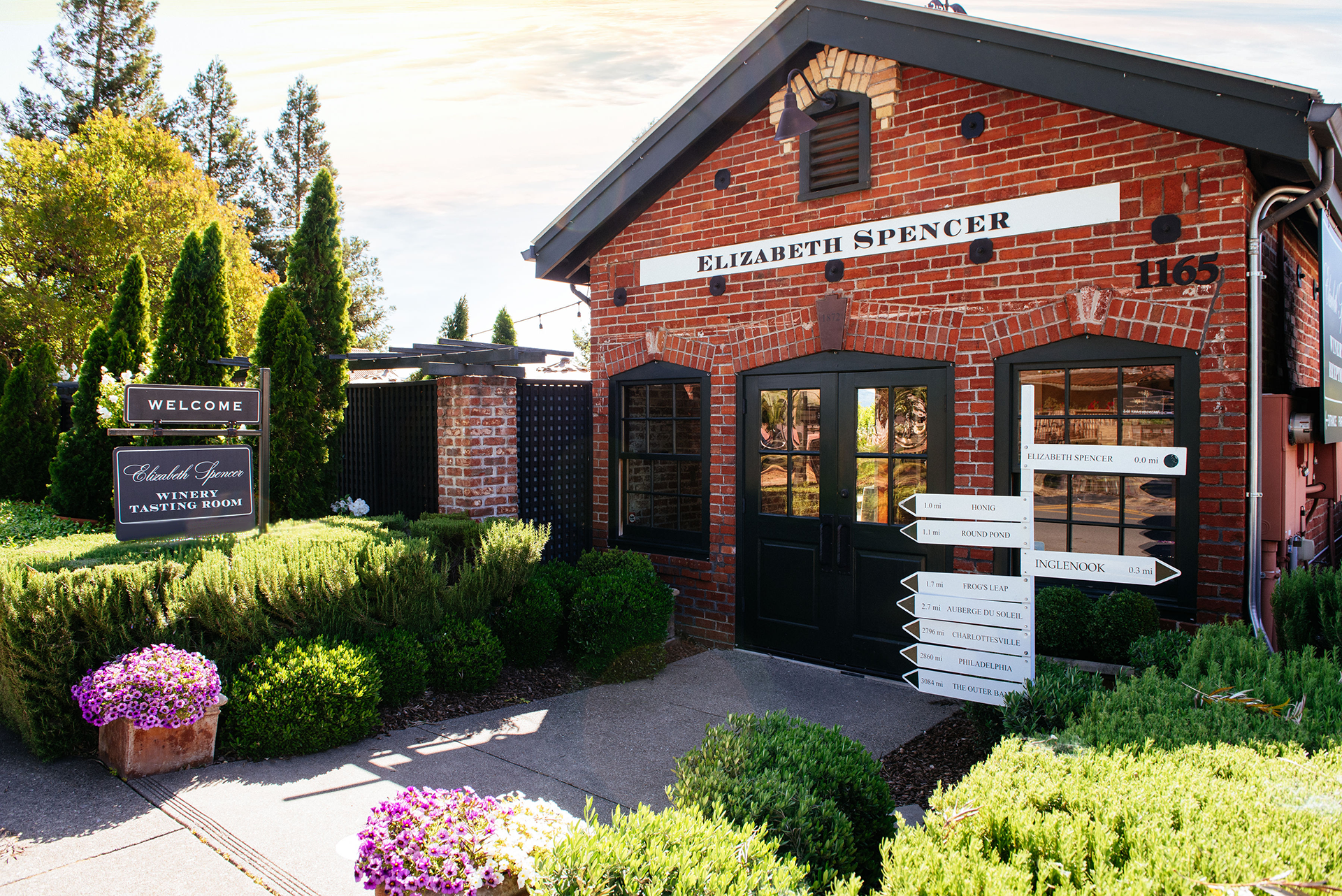
Elizabeth Spencer’s Sarah Vandendriessche guides the Napa Valley Vintners’ environmental stewardship committee.

Reproducing Kopke’s 50-year old Tawny Port

With the creation of a new Tawny Port and White Port categories in March 2022, bottles sporting a 50-year age statement on their labels began to make their debut in January 2023. Prior to the new ruling, cask-matured Tawny and White Ports were categorized as ten, 20, 30, or over 40 years of age; at 50 years, the wines were simply categorized as Very Old. Fifty is the average age of the rare wood-aged Ports from several vintages comprising these blends. In the case of Tawny, one key sensory aspect is the absence of aromas and flavors associated with new oak, which it is never aged in. Kopke, the oldest of Portugal’s Port houses, was established in 1638and possesses one of the deepest inventories of aged Tawnies in theDouro Valley. Along with a handful of other producers, including Messias, Sandeman, Taylor, Quinta do Mourão, and Quinta do Vallado, it has now released a 50-year-old bottling. In honor of the launch, Kopke master blender Carla Tiago led a blendingexercise hosted by Skurnik Wines & Spirits at …

Markham looks to the future

In her role as head winemaker at Markham, Kimberlee Nicholls directs an all-female team that includes assistant winemaker Abigail Horstman, enologist Patricia Sciacca and viticulturist Taylor Abudi. The collaborative culture that thrives at Markham is a direct result of how she prioritizes the professional growth of her team.

Alvarinho’s Authentic Terroir

Alvarinho produced in its native terroir is incomparable to expressions of the variety grown elsewhere. But it may ultimately prove to be on a trajectory similar to that of Pinot Gris, which is renowned for producing light, delicately floral wines in Italy’s Collio region and wines of great mineral intensity and fruit purity in Alsace. Time will tell.

Emilia-Romagna: The Enticing Italian Flavors and Rich culture of Bologna

Best known by Americans for its iconic food products—namely prosciutto di Parma, Parmigiano Reggiano cheese, Balsamic vinegar, and its effervescent Lambrusco wines—there’s far more to Emilia-Romagna than these familiar tastes.

A Home for “The Prisoner”

From the moment its first 385-case lot was labeled, The Prisoner has been an outlier in the California wine industry.

Cabernet with a twist

The practice of finishing whiskey in wine barrels has been around since the 1860s, when scotch producers first utilized Sherry butts as a means of transporting their spirits. But, the tables have now turned and winemakers like James Foster of Stave & Steel currently seek out whiskey barrels – Kentucky bourbon barrels, specifically – as an alternative oak-aging regime for its wines. This approach is hardly new: By the 1970s, Scotch producers had switched almost entirely from Sherry butts to bourbon barrels. They had also started experimenting with still-wine barrel finishes, although the practice didn’t become an established part of the single-malt market until 2004.  A short decade later, the first whiskey barrel-finished wines – primarily Cabernet Sauvignon, Zinfandel and Shiraz – hit the shelves. While wine barrels can add fruitiness, body and even sweetness to whiskeys, it’s what bourbon casks can add to wine that intrigued Stave & Steel’s Foster. Foster who is Senior Director of Super Premium Wine for Livermore, Calif-based The Wine Group selected “freshly dumped” Kentucky bourbon barrels and ran trials …

Big data supports expert wine tasters

In the course of developing software for predicting consumer wine preferences, a Houston-based start up, VineSleuth, shed new light on the abilities of expert wine tasters and the validity of blind tasting assessments. Contrary to popular belief, the company’s VineSleuth metrics, which are based on the work of Chief Science Officer Michael Tompkins and his team, reveal that tasters can consistently identify aroma and flavor characteristics in blind wine evaluations. “We have extensive experimental data which support that expert evaluators have the capacity to precisely identify wine characteristics in blind repeat samples,” said Tompkins whose work spans thirteen years in the field of numerical methods. “During the course of our experiments, our vetted evaluators repeat sample characteristics about 90% of the time,” he says. VineSleuth’s data directly confronts the popular misconception that consistent sensory evaluation of wine is a random occurrence. In developing an algorithm designed to help consumers make wine selections based on personal preference, the company has established a benchmark based on the results of its top-performing tasters (including this author) and intends …

Sparkling Toast to a Still Future

The Los Carneros was pioneered twenty five years ago by sparkling wine producers who brought cache and joie de vivre to what is, in effect, the gateway to Napa and Sonoma Valley wine country. 2016 has seen a flurry of expansion there by still wine producers who are confident there’s a lifestyle proposition that goes hand in hand with selling Pinot Noir and Chardonnay. A veritable force in raising the visibility of Carneros Pinot Noir, Anne Moller-Racke, President and Winegrower of Donum Estate, is spearheading an expansion that includes the construction of a new production winery and tasting room scheduled for completion in 2017. Once a dairy farm, the estate was planted to vines in 1985, came under Moller-Racke’s supervision in 2001 as Donum and was purchased by Danish investors in 2011. “Site is quality; clone is personality,” said Moller-Racke as we tasted current release 2012s sourced from the winery’s four vineyards: Donum and Lawler in Carneros, Winside in Russian River and Angel Camp in Anderson Valley. East Slope ($90), a Calera clone on the …

On Either Side of the Andes

Visits by two winemakers who work on either side of the Andes provided some perspective on the terroirs being targeted in Chile and Argentina for ultra-premium Cabernet Sauvignon, Malbec and cooler-climate varieties, including Pinot Noir and Chardonnay.

A Prima Vista

A prima vista [at first sight] is an Italian saying that typically applies to love, or—in our case—a first encounter with an Italian wine and its maker. A trio of producers from Italy’s pristine Alto Adige region—Tobias Zingerle, Martin Hoffstätter and Ines Giovanett—were in town for a masterclass led by Tim Gaiser, MS at Epic Roasthouse. “Alto Adige is a four-dimensional region,” said Gaiser, who shed some light on the Adige Valley’s diverse terroirs—white volcanic pryazinic soils of the northeast, glacial soils or scree around Bolzano, calcareous clay of the cooler southeastern slopes and the crystalized porphyry rock found at Cantina Terlano. Each producer addressed a flight of four like-variety wines that included current and older vintages: Zingerle, his own Kaltern Caldero Pinot Biancos and those of Cantina Terlano; Hoffstätter, his Gewürztraminer and those of Tramin; Giovanett’s Girlan Pinot Noir and examples from Castelfelder. Intensity, minerality and purity are hallmarks for these wines, with oak playing a secondary role. Gaiser remarked on the diversity of Pinot Noir styles as ranging from Volnay to Central Otago. …

Journey to the west

San Francisco has long been a destination for travelers. Some, like Miljenko “Mike” Grgich, arrive and spend a lifetime realizing their dreams, while others cross the globe for the purpose of sharing their dreams. Croatian-born Mike Ggrich made his way west in 1958 and set the wheels of his destiny in motion when he began making wine at Souverain Cellars. Mike’s legacy is a familiar one, and now, at age 91, the man whose hands made the Chardonnay that helped put California on the map when it won the Paris Tasting in 1976, is a bona fide and well-deserved bon vivant. At a recent retrospective tasting hosted in the newly-renovated Ranch House at his Napa estate, Mike, his nephew and winemaker for Grgich Hills Ivo Jeramaz and daughter Violet seemed as much a part of the terroir as the wines themselves. Together they presented a vertical of Grgich Hills Yountville Selection Cabernet Sauvignon 1991, 1994, 1997, 2004, 2007 and the just-released 2010 for almost 20 years of perspective on the vineyard. Grgich Hills Yountville Selection …

Eclectic, Electric Lodi Zinfandel

Lodi has long been synonymous with Zinfandel. The region which is defined by seven sub-regions produces 40 percent of the state’s crop. Vineyards of old and downright ancient vines have survived due largely to sandy, Phylloxera-free soils and the popularity of white Zinfandel. As a mono-varietal red, Zinfandel’s exuberant character has made it a favorite among consumers and fueled Lodi’s focus on the production of world-class wines. As early as 2003, when there were 50 wineries in the AVA, the Lodi Winegrape Commission began evaluating wines submitted by producers as part of a selected case known as the 12 Zins of Lodi. A decade later and with over 80 bonded to its credit, Lodi Zinfandels are being made in a broader range of weights and styles which makes the prospect of a representative case even more intriguing. Read the article here: Lodi Zinfandel 42014

A Rising Tide: Rosé Carries the Reds of Northern Provence to Shore

A rising tide lifts all boats is an aphorism that neatly applies to the winegrow- ing economy of Provence. The red and white wines—from region whose identity has been associated with pink wine since it was settled by the Phoenicians in 600 BCE—are riding to shore on a growing wave of Provençal rosé. According to the Conseil Interprofessionnel des Vins de Provence (CIVP), 2014 marks the 11th consecutive year of double-digit market growth for rosé in the U.S. and retail sales of premium rosé wines—now averaging about $17 a bottle—have jumped by 53% in value. Read the entire article here: A Rising Tide

An Oakville Retrospective: A Look at 19 Vintages of Groth Cabernet Sauvignon Reserve

  For the maker, wine requires patience; it seems to mark time at a different pace than much of the world around it. Imagine a chef who had 30 tries in as many years to master a recipe or a musician who plays one performance a year for three decades to master a symphony. For the casual consumer, however, wine is, more often than not, immediate gratification. Read the article here: An Oakville Retrospective

Sprucing Up The Goose: A New Chapter For Goosecross Cellars

“We’re in pop-up mode,” said vintner Christi Coors Ficeli who purchased Goosecross Cellars in 2013 and broke ground on a winery expansion in November 2014. Closing the tasting room during construction wasn’t an option for Coors Ficeli, whose fiercely loyal club members are content to taste her current releases in a single-wide trailer with a view of the construction. “We’re engaging our club members in the next chapter of our winery’s story,” says Coors Ficeli.“When completed, the new winery will have a large patio area devoted to outdoor seating so we can take full advantage of our west-facing view of the Mayacamas.” Read the entire article here: Sprucing Up The Goose

Fanfare for Castello di Nipozzano’s Vecchie Viti

Story and photos by Deborah Parker Wong

Anderson Valley’s Pinot

Many Anderson Valley Pinot Noir producers time the commercial release of their wines around the annual Pinot Noir Festival and technical seminar, now in its sixteenth year. This year’s event took place in May, and some 40 producers poured their wines at Goldeneye Winery in Philo. As vintages go, 2010 and 2011 challenged producers in more ways than one. Yields were down in 2010 by as much as 30 percent due to a blast of heat in August. Fruit that wasn’t scorched that year ripened, but not overly, resulting in wines with good acidity and flavors. A wet 2011 had many producers scrambling to pick before October rains intensified pressure from botrytis. While Anderson Valley Pinot Noirs can be roughly sorted as one of two broadly-defined wine styles we’ll call “fragrant and sleek” and “bold and deep,” the string of cooler La Niña vintages that started in 2009 and continued through 2011 has closed the gap somewhat on that divide. With more generous vintages such as 2012 and 2013, which is shaping as warm and …

Rutherford Dust 2010

We’re kicking up the dust once again with the 2010 vintage presented by the Rutherford Dust Society at a blind tasting held at Beaulieu Vineyards’ Rutherford House in July. According to President Davie Piña, the Society is in the last stages of their watershed restoration project which has lessened erosion and reduced disease pressure along the 4.5 miles of riverbank that bisect the AVA. “Rutherford growers have given up eight acres of vineyard to restore the river,” said Piña who was met with a round of much-deserved applause for his pivotal role in managing the project. Across the 18 red wines shown that morning, vintage events in 2010 including cool, grey La Niña conditions punctuated by a severe heat spike and untimely rain during harvest produced a narrower range of styles. The tasting was organized moving clockwise around the AVA from west to east and conditions at Rutherford House were ideal with the wines being given time to aerate prior to the tasting. Read the full article at Rutherford Dust 2010.

Grands Crus Classés of Saint Émilion 2010

It’s alive! Unlike its Left Bank counterpart, the Saint Émilion classification is indeed a living thing. The promotion of 17 châteaux not previously classified to the status of Grands Crus Classés in 2012 made this year’s tasting of 33 (of the 63 classified) all the more interesting. Having tasted the 2009s during visits to several of these estates prior to their promotion, focus was squarely on the 2010s during the San Francisco tasting held at Terra Gallery in early November. It’s fascinating to witness change, and the châteaux, which were on an upward trajectory in 2009 for the most part, didn’t disappoint. Read the full article here at Grands Crus Classés of Saint Émilion.

Turning Data into Dollars

A virtual tidal wave of data is fueling the race toward accurately predicting consumer preferences and buying behavior. With intelligent computer systems now gathering information in real time, businesses of all sizes are experiencing a sea change in the way they and their customers use technology. Until very recently, we looked to the past and relied on historical data to identify current trends and to predict consumer behavior. But now we’re looking forward. Information technology has spun us around 180 degrees and given us the ability to use data to extrapolate and make predictions. With a new generation of applications being developed to predict consumer preferences and wine-buying behavior, companies of all sizes are clearly pursuing the promise of big data. “Predication is the nut that everyone is trying to crack,” said data scientist Michael J. Tompkins, cofounder and chief science officer for Houston-based startup VineSleuth. For Tompkins, whose typical project may involve millions of unknowns, wine has its own unique set of challenges. “It’s not as if we have the answer yet,” he said. …

Going to Extremes

On the first day of spring in the Southern Hemisphere, a cold, dry Zonda or rain shadow wind swept down the eastern slopes of the Andes and dropped a blanket of snow over the vineyards of Mendoza, Argentina. “It’s a beautiful sight but devastating to budding vines and fruit trees when followed by a frost,” said Andrés Rosberg, President of the Association of Argentine Sommeliers. Early-budding Chardonnay (and the stone fruit trees) in the Valle de Uco and San Rafael suffered this vintage, but frost and hail storms are the exceptions in Mendoza, where wine-growing conditions are considered less than extreme. Argentina’s most rigorous wine-growing conditions are found at the country’s extremes: from remote 10,000-foot sites in Salta to the north and the cold, arid steppes of Patagonia to the south. But the country’s wine culture traces its roots to more hospitable sites. Vines first arrived in the northern province of Santiago del Estero and were brought from Chile to the San Juan and Mendoza regions in the mid-16th century. The arrival of European immigrants …

Long-lived Lake County

Wine quality has been on the rise in Lake County and winegrowers there have their sights set determinedly on the future—and it’s a very bright one at that. Driven by increased demand for high-quality Cabernet Sauvignon, Zinfandel, Petite Sirah and Sauvignon Blanc, the value of the region’s wine grapes climbed by 20 percent in 2012, reaching a ten-year high, while yields inched up by just three percent. Here at THE TASTING PANEl, we’ve been following winegrowing in Lake County closely for the last five years. When questions arose about the age ability of the region’s wines, we were quick to take up the challenge. More often than not, exposure to Lake County wines is limited to the supporting role they play in blends from nearby appellations. When this point was raised during a technical seminar hosted in June at MacMurray Ranch by the appellation’s winegrowers, Steele Wines’ Joy Merrilees had answers at the ready but no proof positive that the region’s high-elevation wines can withstand the test of time. Read the complete article here…Long-lived Lake …

Blind Wine Review: Premiere Napa Valley’s 2013 Multi-Vintage Perspective Tasting

While it’s possible to barrel taste recent vintages at many of the preview parties that take place around Premiere, the Napa Valley Vintners’ annual tasting and live barrel auction, a three-vintage, blind perspective tasting of ’08, ’09 and ’10 Cabernet Sauvignons and ’09, ’10 and ’11Chardonnays from 24 Napa Valley wineries was made to order for this column. Designed to demonstrate how Napa Valley vintages unfold over the short term, the multi-vintage tasting of 72 wines was held at the CIA’s Rudd Center on Friday, February 22. The wines presented were whittled down from more than 90 submissions in each category by a jury of local winemakers, buyers and educators including the CIA’s own Traci Dutton and Bob Bath, MS. Release dates are still in the works for many of the ’11 Chardonnays and the majority of ’09 and ’10 Cabernets. It’s worth noting that all of the wines were decanted into hourglass-shaped carafes which tended to work against the Chardonnays when they were poured through the necks of decanters being gripped by warm hands. …

Blind Wine Review: That Rutherford Dust

For this inaugural Blind Tasting, I delved into my notebook for highlights of ten wines that came out on top during an August 2012 presentation of Napa Valley Cabernet Sauvignons from Napa Valley’s Rutherford AVA. The Rutherford Dust Society tasting presented 27 wines from the 2009 vintage—in reverse order from tastings held in prior years. Three flights of nine wines began with those from Rutherford’s most southwesterly sites and moved north and across the AVA, concluding with wines from the most southeasterly sites.   1. Savory roasted nuts, cinnamon and black plum notes with dark berry flavors and silky, medium-weight tannins. $100 2. Earth and charred oak notes with bright, focused red fruit that deepens towards the finish. $65 3. Ripe, jammy blackberry complemented by toast and sweet vanilla with a generous structure that closes softly. $185 4. Floral, high-toned notes of lavender and blue fruit with bright plum and a savory, granular texture. $65 5. Anise and complex umami aromas; lean, intense dark fruit and leather finishing with notes of toasty caramel. $45 6. Bright, …

Eyes on the prize

Once you’ve made the decision to pursue a professional certification, there’s more to making the grade than meets the eye. For anyone considering, or already pursuing,one of the beverage industry’s most rigorous professional certifications — the Wine & Spirit Education Trust(WSET) Diploma—aligning your expectations and adopting strategies will make navigating the program easier and significantly more rewarding. With only 36 Diplomas awarded in the U.S. by the London-based WSET in 2008 (WSET now lists awards by year and Approved Program Provider), the benefits of sticking out this program, which can be completed in as little as two years or self-paced over a longer period, are many. WSET certification is a proven way to differentiate yourself in any job market. Diploma candidate William Emile Bond III recently accepted a position as a Northern Wildman and Sons, where his WSET status helped him connect. “As far as credentials go, it’s a valuable thing to have on your resume,” Bond says. “The hiring manager at Wildman earned his Diploma in New York, and it definitely caught his eye …

The Undiscovered Burgundy

Visually, Burgundy isn’t a particularly mysterious place; the low-growing Pinot Noir and Chardonnay vines hunker over the earth in their search for heat. From a vantage point to the east of Chablis, you can survey the gentle landscape and precious grand cru sites in a sweeping glance but, the wines themselves continue to remain a mystery—one that we ponder with each passing vintage. During the week-long parade of trade tastings known fittingly as Les Grands Jours, it seemed as if no stone has been left unturned by importers in their efforts to demystify the  wines. Tastings that began in Chablis and stretched to the far reaches of the Mâconnais revealed that, while importers have been astute in seeking out quality, there are new discoveries to be made in Burgundy. Primarily in the form of young producers who have branched out, after years of mentoring, to start their own labels and less-visible sub-regions whose wine quality is pushing forward by leaps and bounds. At this bi-annual celebration, Burgundy’s grand cru vineyards sustain the most scrutiny, and …

It Takes A Village

Large or small, via négociant or sold direct, Right Bank producers continue to make quality a priority. With the purchase and renovation of Château Belair-Monnage in 2008, Ets Jean-Pierre Moueix’s holdings now stand at 11 estates concentrated in northern Pomerol and the southeastern corner of Saint-Émilion. A 2010 barrel sample showed complex, spicy tannins and more concentrated black fruit than in previous vintages.  Read full article at…St_Emilion

Journey up the river: The Loire Valley from Nantes to Sancerre

It can be said that each wine region of France has a personality, one dictated as much by the winegrowers themselves as it is by geography, history and grape varieties. To the southwest of Paris lies the Loire Valley, comprising four distinct regions running westward with the fl ow of the Loire River; most of the winegrowing here occurs within sight of its banks or those of its many tributaries. The Loire is by nature a languid river; it meanders through countryside dotted with Renaissance palaces and châteaux as it makes its way towards the Atlantic Ocean. From this terminus, the river’s estuary in the Nantais region, a journey up the river begins. Complete article here…Loire_Valley

The language of the Languedoc

The AOC winegrowers of the Languedoc are an eclectic group: genteel local families, pioneers from France’s most prestigious wine regions and European ex-pats, all of whom express a similar goal: to make wines that convey the spirit of their distinct growing regions from the varieties best suited to them. More than ever before, quality is now the factor that distinguishes Languedoc’s AOC-level wines. Though each Languedoc sub-appellation has unique terroir, the region overall benefits from maritime influence, hot summers, drying winds and mild winters that create some of the most consistent vintages in all of France. AOC producers emphasize lower yields, sustainable practices and hygienic winemaking as means to showcase the quality of their fruit and finished wines. Complete article here…The Language of the Languedoc