

25 Wines Spied in “Drops of God” Second Season
French wines takes center stage in season two.
French wines takes center stage in season two.

The message my students are sending to the makers of the world’s historic sweet wines amounts to a love letter. My passion for these historic wines can only be described as a love affair.

Bubbles are the hallmark of all sparkling wines, and they play a significant role in the cachet that surrounds this category. Even the terms “bubbles,” “mousse,” and “Champagne” elicit a pleasurable response in expert and novice consumers alike.

Gigondas joins Languedoc’s oldest white-wine AOP, Clairette du Languedoc, established in 1948, and Clairette de Bellegarde, a tiny Southern Rhône AOP in the Costières de Nîmes, in showcasing
Clairette, which often serves as the base in Southern Rhône and Languedoc blends.

There’s more to wine grape stems than tannin. The discovery of new stem compounds has prompted researchers at the Laboratoire Excell biochemistry lab in Bordeaux to re-evaluate the benefits of including stems during this crucial stage of production.

The San Francisco Bay Area has long been a destination for the wine world’s movers and shakers; you can read about those I meet in my new column, Date by the Gate. This cycle, winemakers and authors made their way to the the area with tastings and book signings that were nothing less than awe-inspiring.

While perceptual learning plays an important role in evaluating wine, there’s another phenomenon related to perception that arises from the wine itself: perceptual interaction. When our olfactory system
is confronted with complex aromas, we often perceive them as a single aroma due to odor blending in a process known as
configural perception (our perception of the smell of coffee as a single aroma is just one of many examples).

After tasting the Piper-Heidsieck Hors-Série 1971 ($499), a rare, late disgorged Champagne that spent 49 years resting peacefully on its lees, I was inspired to delve deeper into the role yeast autolysis plays in the flavor development of sparkling wine.
Now the days of comparing a
glass of Northern Rhône Syrah to
a strip of peppered bacon appear
to be coming to an end.

An infamous rooster named Maurice and a gaggle of contented geese have helped ensure biodiversity in France. In the face of complaints about the noises and smells typical of the countryside, the French Parliament passed a law on January 21, 2021, protecting what it calls the “sensory heritage” of its rural areas.

No one needs a reason to drink Champagne but ringing out 2020 is certainly a good opportunity to reach for something beyond your sentimental favorite. In an effort to learn more about Billecart-Salmon’s Brut Sous Bois, I asked Mathieu Roland-Billecart for the inside scoop on this particular cuvée.
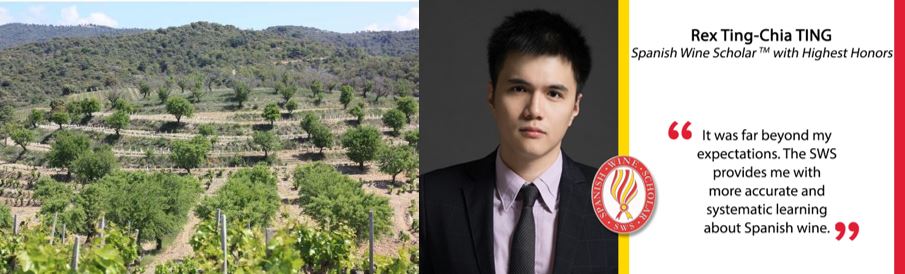
A hearty welcome to the site for Rex Ting-chia Ting, DipWSET who has translated Five Reasons to Love Grenache Garnacha Blanc and Gris for those who read Chinese.

There is no better time to gauge the quality and stylistic range of Sauvignon Blanc than during the only international wine competition devoted solely to the variety: the 2020 Concours Mondial du Sauvignon, which unfolded in Touraine, France, in early March.

The Roussillon region of Southern France is home to five AOPS that produce fortified vins doux naturel wines.

There are two basic, intentional approaches to food and wine pairing: mirroring the flavors and weight of a wine with similar foods resulting in what I like to call “a sublime experience” and contrasting pairings, a “high-risk, high-reward approach” that works the opposite ends of the flavor spectrum for maximum impact.

In a rare tête-a-tête, The SOMM Journal joined Didier Depond, President of the Champagne houses Salon and Delamotte, for an effervescent lunch featuring their current releases at San Francisco’s Piperade. We began with the superbly chalky 2008 Delamotte, which hails from just six Grand Cru villages. The 100 percent Blanc de Blanc brims with texture and ripe golden apple notes, and after observing the intensity of fruit on the mid-palate, I queried Depond on the risk climate change poses to the houses’ iconic style. He was quite circumspect in his response: “The culture of the vineyards in Champagne relies on balance, and we will balance them with this shift.” Despite more extreme weather events like the freak hailstorms earlier this year, warming temperatures in this marginal growing region may in fact work to the advantage of Champagne producers. Addressing the elephant in the room, we discussed the hotly debated expansion of the Champagne AOP area by an additional 5 percent. “Historically, these approved areas were under vine,” Depond said. “And, despite what you’ve read, there …
While the level of residual sugar plays a role in the finished style of a wine, the color of all wines—and the color of everything we see, for that matter—is determined by residual light. Any systematic analysis of wine begins with a careful observation of color and what we see is the result of light waves being reflected by compounds in the liquid. The plant pigments associated with flower and fruit coloration are known as flavonoids, with the most commonly known being the anthocyanins—derived from the Greek words for flower and blue, anthos and kyanos. These water-soluble pigments found in leaves, stems, roots, flowers, and fruits show us red, purple, or blue hues depending on their pH levels. Read the article here Residual Light June-July 2018s

Considering the benefits of spending more on wine. Luxury wine brands rank among a handful of product categories that are an outright contradiction of the law of demand. Known as Veblen goods after the American economist Thorstein Veblen, luxury products like wine, cars, jewelry, and artwork occupy a rarified status among consumers who are inclined to buy more as the price increases. While conspicuous consumption stands in direct opposition to the pursuit of quality for value that drives many a savvy wine buyer, neuroscientists have reported that when we buy luxury goods, we experience emotions of trust, security, contentment, and confidence over the duration of ownership. Apparently there’s more to the experience of drinking a bottle of ultra-premium Champagne, even if its lifespan lasts just a few hours during dinner. Authenticity and timelessness are considered the hallmarks of established luxury brands, but it’s possible for newly-minted brands to achieve a similar status when their underlying concept demonstrates those principles. Champagne is unquestionably a luxury product, and many brands and wines of the highest quality occupy …
From Asti to Champagne, bubbles were a bright spot in 2017. While sparkling wine is no longer confined to special occasions, it continues to mark some of life’s most memorable occasions and its charm can elevate the most mundane moments. For many, 2017 was a year of exuberant highs and abysmal lows which made living in the moment and being grateful for predictable things like the quality of a DOCG Prosecco from Cartizze or the toasty aromas of a Champagne aged on the lees for a decade all the easier. Here’s a look at what I discovered about bubbles during 2017’s twelve months of tastings. January began with a traditional sparkling toast courtesy of the Boisset Collection whose exceptional Buena Vista “La Victoire” Champagne ($50) honors the history of Sonoma’s Buena Vista winery, the first to introduce méthode traditionelle sparkling wine to California in the 19th-century. “La Victoire” is a blend of 70% Pinot Noir from Premier Cru vineyards from the Montagne de Reims, and 30% Chardonnay mostly from Grand Cru Mesnil sur Oger and Chouilly. The wine …

The Gifts of Bacchus: Gilding the lily with Bordeaux Gold
It’s estimated that roughly 25 percent of the world’s wine production is sold as bulk wine, a segment that’s described by one broker as the industry’s “soft underbelly” and exists for most consumers in the form of virtual brands. With the rise in popularity of bulk wine-derived, private label brands (brands developed for retailers, hotel chains, and restaurants, which sell them directly to consumers) and more producers entering the market in recent years, bulk wine has shed its low-rent image and become a hot commodity. With a healthy 6 percent annual growth rate for the last six years—and no signs of lagging—capitalizing on the continuing growth that’s predicted for the global bulk market depends largely on where you sit in the value chain. Identifying opportunities means navigating between the supply side of producers, brokers, and contract suppliers, and the demand side that includes retailers and on-premise operators. Short-term supply outlook Staying one step ahead of expansions and contractions of the bulk wine market is key for short- and long-term planning. Increasingly, brokers and contract suppliers …
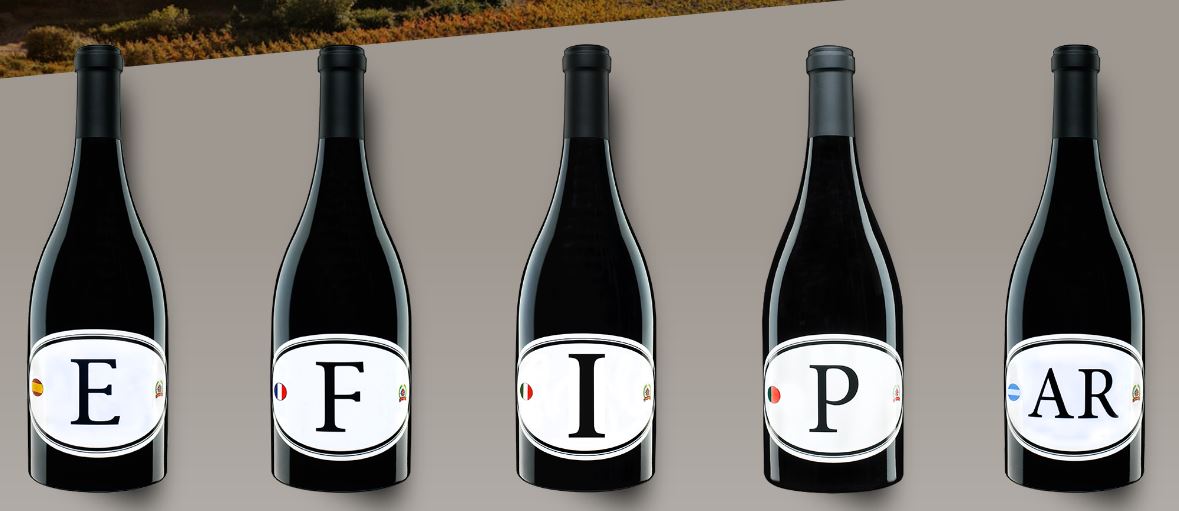
While researching the current popularity of blended wines in preparation for a talk at the 2017 International Bulk Wine and Spirits Show about blends that begin life as bulk wine, I discovered white blends emerged as the exception rather than the rule. Consumer preferences for monovarietal white wines—Sauvignon Blanc is currently the fastest-growing white variety—are the likely drivers there, but that doesn’t stop winemakers from creating successful proprietary blends. In 2014, blended wines accounted for more than 40 percent of new entries to the U.S. market, with the lion’s share going to reds (29.3 percent) and whites accounting for just 1.9 percent. When surveyed, domestic consumers said they liked blended wines because they are experimental, interesting and trendy with better value. But it’s not the classic blends from regions like Bordeaux, the Southern Rhône, Valpolicella and Rioja they’re referring to; it’s the under-$25 blends that are marketed as nothing more than just that—blends. One striking example of success with modern blends is Dave Phinney’s Locations Wine portfolio, which goes even further by eliminating vintage and relying …

San Francisco continues to be one of the world’s most important destinations for leading players in the wine industry, so it’s no surprise that a major conference dedicated to the private label and bulk trade is making its way to the city on July 26-27.

In more ways than one, Champagne has begun infiltrating wineries in Sonoma and Napa counties. With several unprecedented examples that include Napa cult wine producer Sinegal launching its brand in conjunction with a prestige Champagne house, Sonoma’s Buena Vista Winery–branded Champagne and the unique partnership between Jordan Winery and the grower Champagne house of AR Lenoble, there’s a trend in the making.
Pyrazines—too much of a good thing and they’re a fault; absent in varieties like Sauvignon Blanc and they leave something to be desired. In relation to bitterness, pyrazines can be the source of a flaw or fault, but that’s just one of many ways they can impact wine flavor. Ask any maker of Bordeaux varieties, someone who grows grapes in a marginal climate or experiences a colder vintage, about their concerns, and they’ll surely count elevated pyrazines among them. Admittedly, pyrazines are a double-edged sword. Without them we wouldn’t have the expansive range of wine styles that are possible from Sauvignon Blanc or the markers that help us identify the family of Bordeaux varieties and the likes of Carmenère. But in the extreme, pyrazines dominate wine at the expense of other varietal flavors. We’ve all tasted them—from pungently herbaceous boxwood (the polite reference to cat pee) and jalapeño pepper in Sauvignon Blanc to rank green bell pepper or even weeds in red wines that haven’t achieved physiological ripeness. Pyrazines are the family of volatile organic …

What are your beliefs about terroir? Researchers across multiple disciplines find some common ground at the 2016 Terroir Congress XI.

Agricultural drones may be creating plenty of buzz, but their terrestrial cousins — the robots — are poised to make their commercial debut. Next year promises to be the year of the agricultural robot. With the altruistic vision of creating a sustainable society where future generations are free from worry about food security and safety, the world’s first robotic lettuce farm will go into production in 2017. Kyoto, Japan-based company, Spread, has retooled an indoor vertical lettuce plant where robots will plant, water, harvest and trim up to 30,000 heads of lettuce every day. The automated plant will reduce labor costs by 50%, cut energy use by 30% and recycle 98% of the water needed to grow the crops. The company has plans to build similar robot farms to grow staple crops and plant protein around the world. Growing lettuce in a greenhouse is a far cry from managing a vineyard, but from apple harvesting robots that can carry bins of fruit weighing half a ton, to grapevine pruning rovers that make surgical cuts, several …

A rising tide lifts all boats is an aphorism that neatly applies to the winegrow- ing economy of Provence. The red and white wines—from region whose identity has been associated with pink wine since it was settled by the Phoenicians in 600 BCE—are riding to shore on a growing wave of Provençal rosé. According to the Conseil Interprofessionnel des Vins de Provence (CIVP), 2014 marks the 11th consecutive year of double-digit market growth for rosé in the U.S. and retail sales of premium rosé wines—now averaging about $17 a bottle—have jumped by 53% in value. Read the entire article here: A Rising Tide

Both the French and the Brits are drinking less Champagne, but America’s obsession with bubbles is growing. Sales of Champagne in the U.S. are on the uptick even as consumers look to Prosecco and Cava to add some additional sparkle to their lives. When the Comité Interprofessionnel du Vin de Champagne (CIVC) came to town last year with a large, well-orchestrated tasting at the Fairmont Hotel, Blind Tasting focused on the Réserve non- vintage wines; the bread-and-butter category that makes up 81% of all Champagne imports to the U.S. During a briefing at Prospect restaurant, Washington, D.C.- based Sam Heitner who directs the Champagne Bureau USA pointed to rosé as a significant trend, “It’s the fastest growing segment of Champagne in the U.S. making up 16.2% (that’s 2.9 million bottles) of all shipments.” The CIVC reports that in 2013 Americans drank 17.85 million bottles of Champagne, most of which, 87%, was produced by houses, with winegrowers and co-ops exporting just 13% of their production to the U.S. Read the entire article here: Non-Vintage Champagne
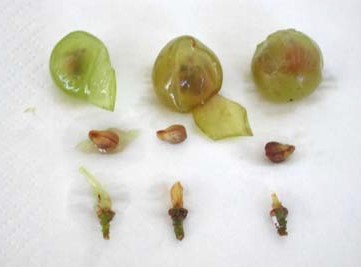
If everyone on your winegrowing and winemaking teams shares a common language, there’s less risk involved when it comes to making crucial decisions. Few would argue that the most crucial decision a winemaker faces is when to pick. Beyond establishing intentions for the style and quality of the finished wine, making confident, proactive picking decisions relies on accurately assessing levels of ripeness. This acquired skill is on that vineyard managers and winemakers typically master through trial and error as they learn to speak the same language when describing degrees of fruit maturity and other sough-after qualities. Using the analytical method of Berry Sensory Analysis (BSA), a technique to describe the characteristics of grape maturity developed by Jacques Rousseau at the Institut Cooperatif du Vin in Montpellier, France, and introduced in Northern California by Enartis Vinquiry in 2006, winemakers can c onfidently assess fruit quality for specific wine styles and, in turn, gain more control over harvest timing decisions and production methods. Read the entire article here: Berry Sensory Analysis

It’s alive! Unlike its Left Bank counterpart, the Saint Émilion classification is indeed a living thing. The promotion of 17 châteaux not previously classified to the status of Grands Crus Classés in 2012 made this year’s tasting of 33 (of the 63 classified) all the more interesting. Having tasted the 2009s during visits to several of these estates prior to their promotion, focus was squarely on the 2010s during the San Francisco tasting held at Terra Gallery in early November. It’s fascinating to witness change, and the châteaux, which were on an upward trajectory in 2009 for the most part, didn’t disappoint. Read the full article here at Grands Crus Classés of Saint Émilion.
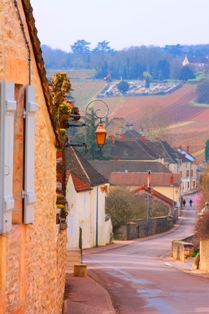
Visually, Burgundy isn’t a particularly mysterious place; the low-growing Pinot Noir and Chardonnay vines hunker over the earth in their search for heat. From a vantage point to the east of Chablis, you can survey the gentle landscape and precious grand cru sites in a sweeping glance but, the wines themselves continue to remain a mystery—one that we ponder with each passing vintage. During the week-long parade of trade tastings known fittingly as Les Grands Jours, it seemed as if no stone has been left unturned by importers in their efforts to demystify the wines. Tastings that began in Chablis and stretched to the far reaches of the Mâconnais revealed that, while importers have been astute in seeking out quality, there are new discoveries to be made in Burgundy. Primarily in the form of young producers who have branched out, after years of mentoring, to start their own labels and less-visible sub-regions whose wine quality is pushing forward by leaps and bounds. At this bi-annual celebration, Burgundy’s grand cru vineyards sustain the most scrutiny, and …

Large or small, via négociant or sold direct, Right Bank producers continue to make quality a priority. With the purchase and renovation of Château Belair-Monnage in 2008, Ets Jean-Pierre Moueix’s holdings now stand at 11 estates concentrated in northern Pomerol and the southeastern corner of Saint-Émilion. A 2010 barrel sample showed complex, spicy tannins and more concentrated black fruit than in previous vintages. Read full article at…St_Emilion

It can be said that each wine region of France has a personality, one dictated as much by the winegrowers themselves as it is by geography, history and grape varieties. To the southwest of Paris lies the Loire Valley, comprising four distinct regions running westward with the fl ow of the Loire River; most of the winegrowing here occurs within sight of its banks or those of its many tributaries. The Loire is by nature a languid river; it meanders through countryside dotted with Renaissance palaces and châteaux as it makes its way towards the Atlantic Ocean. From this terminus, the river’s estuary in the Nantais region, a journey up the river begins. Complete article here…Loire_Valley

During a research trip to the Languedoc region of southern France, AOC winegrowers there were quick to point out the increased performance of the equipment they are using to grow and harvest their grapes. With the Languedoc being home to 70 % of the organic wines in France, mechanization is down-played by some producers who seek to limit all impacts on their sites, but there is no denying the leaps in quality and efficiency that have been brought to bear through mechanical pre-pruning and harvesting. Complete article here…Multi-tasking Harvesters May June 09

The AOC winegrowers of the Languedoc are an eclectic group: genteel local families, pioneers from France’s most prestigious wine regions and European ex-pats, all of whom express a similar goal: to make wines that convey the spirit of their distinct growing regions from the varieties best suited to them. More than ever before, quality is now the factor that distinguishes Languedoc’s AOC-level wines. Though each Languedoc sub-appellation has unique terroir, the region overall benefits from maritime influence, hot summers, drying winds and mild winters that create some of the most consistent vintages in all of France. AOC producers emphasize lower yields, sustainable practices and hygienic winemaking as means to showcase the quality of their fruit and finished wines. Complete article here…The Language of the Languedoc